

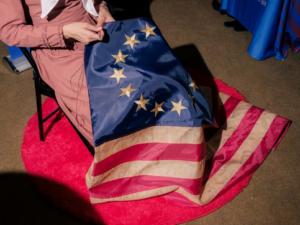
 Uncle Sam is having a hell of a 250th. He’s staggering around in confusion, like somebody who attends a big national party and looks up from his twenty-dollar cheeseburger only to find there’s nobody else there.
If you’re in America right now, you’re part of the country’s Pluto Return (see this podcast), which marks the death of a certain version of the USA. The King of the World version.
It looks like it won’t be a graceful death. Not like that of the British Empire, which receded from global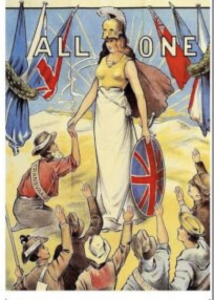 dominance with a stiff upper lip.
But we can try for a conscious death. Let’s use the semiquincentennial to identify which aspects of the country are dying, organically and appropriately dying, and then allow ourselves to imagine a reborn version of the country. One we can believe in.
In Nature, decay and regeneration overlap. The same thing is going on here. The country is flailing around in breakdown, while simultaneously struggling to be reborn. If we choose, we can be mindful participants in the process, separating out the obsolete features of the American Experiment from the sublime ones.
One of the most sublime: the ingenious system of checks and balances. Now that it’s in fatal peril, we can see what an extraordinary idea it is. Three co-equal branches of government, all keeping each other honest.
 Less inspiring are the anachronistic ideas, unchanged from 1776, now rising to the surface like blue sludge from the bottom of a reflecting pool.
Like the electoral college, which has become, over time, quite literally anti-democratic. And the right to bear arms, which might have made sense in the age of muskets, but now, in the age of AR-15s, not so much.
As individuals, we always have two choices in a Plutonian situation: we either respond to the rebirth that’s trying to happen, or we react against it.  The reactionaries in the USA right now, like the trad wives and the climate change deniers, are reacting tooth and claw. They’re fighting for a return to a fantasy Golden Age.
The people who Fox is for live in 1965. – Roger Aisles
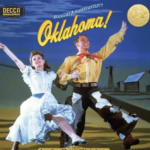 Their hero, our 80-year-old president, favors the crappy cultural artifacts he remembers from his childhood, like “Oklahoma!” and shitty candy bars.
But life never moves backwards. Women are not going back into the kitchen, barefoot and pregnant. America’s racists and xenophobes will lose their culture wars, and not just on moral grounds. They’re resisting global trends that have nothing to do with ideology.
Such as demographic facts. We will never again live in a pre-civil-rights world. White males may still be dominant in terms of power, but they’re no longer dominant in terms of numbers. Humanity is moving towards the meltiest melting pot of races and nationalities the world has ever seen (discussed in this podcast).
Let’s celebrate this historical moment by reclaiming the essential meaning of patriotism.
On the face of it, patriotism is an allegiance to a certain region – traditionally, the one where you were born. These days, of course, it’s less and less guaranteed that you were born where you now live. This is our first clue that something anachronistic is going on.
Way back when, before landmasses were divided up into countries, there was a natural logic to identifying with a specific patch of geography. You saw yourself as a member of the River Tribe or the People of the Valley, and fealty to your group was a matter or survival.
Later, this loyalty to a fatherland (patris) lost its spiritual basis in Nature. It took on a religious basis, based on politics. It was still a matter of survival, but for different reasons. The king was divinely appointed, and if you defied him, you were defying God. You could have your head chopped off.
 Here in modern times, the risk of death is no longer literal, but you’d never know it. If you’re a politician who forgets to wear a flag pin, your voters might react as if you’d committed a capital crime.
Arguably the most exquisite feature of the chart of 7/4/1776 is that you didn’t have to be religious to honor your country and respect its laws. But the link between God and Country never really went away. There’s something very churchy, still, about American patriotism. A sense of old-world sin clings to it.
Consider the arcane prohibition against allowing the flag to touch the ground. If you mess up rituals like this, you might be accused not just of carelessness, but moral turpitude.
I was a child during the Cold War, when the conflation of geopolitics, nationalism and morality was total.  Nobody dared question having to say “I pledge allegiance to the flag” every morning. Your parents might get blacklisted.
And then there’s the military rationale for patriotism. Governments have always needed cannon fodder, and flag-waving has always been the bait.
It’s amazing that this ploy still works, in our cynical age. The tragic realities of soldiering are everywhere visible. Wannabe recruits will surely have seen veterans panhandling on the sidewalk, some of them crippled with PTSD or addiction, all of them callously neglected by their government.
Maybe this is why the military increasingly depends on Hollywood to fill its ranks. Movies implicitly promise young men that they’ll get to do beefy stunts like Tom Cruise, or wear a white uniform like Richard Gere. A sure bet to get the girl.
 And a job. The army’s “Be All You Can Be” campaign promises that if you enlist, you’ll have a better future than you could otherwise hope for. The slogan exploits the disaffectedness, even the hopelessness, of its target demographic: boys from mostly impoverished and undereducated backgrounds.
Forever and always, most soldiers come from poverty.
A dude like Graham Platner, who likes to talk about his stint in the Marines, is an exception socioeconomically. He’s a prep school lad who comes from money. However, he does seem to have something in common with his less privileged brothers: a motivation to escape their childhoods.
I propose that Platner, and everybody else who uses the phrase “serving my country,” should be asked follow-up questions. What was the service rendered, exactly? For that matter, who is “the country”? Is it the same thing as “American interests”? Does it mean the oil interests that were served by the Iraq war, or by whatever-that-was in Venezuela?
Let’s also challenge that perennial chestnut, “keeping America safe.” Do any of us feel safer after Hegseth bombed that girls’ school, a moral abomination as well as an incitement to jihadist vengeance?
In any case, military logic does not seem to be the main driver of America’s current patriotic passions. The America Firsters don’t want to bomb other countries. Unlike the defense contractors and the neo-cons, they don’t even want to think about other countries.
In fact, MAGA believes that caring about other countries is something libtards do. Cosmopolitanism is suspect. The enemies Trump World wants to protect itself against are not external but domestic.
 Our closest reference point to the patriotism of today is the 1860s (when the US chart was under transits which mirror the ones we’re having right now, as discussed in this podcast.) It wasn’t just economics that ignited the Civil War. It was a romanticized, hyper-regional nostalgia.
Change is hard; denial is tempting. But there’s no going back.
Most Americans seem not to realize it, but here in the 21st Century, economic isolationism isn’t really a thing (see: Strait of Hormuz). Neither is cultural isolationism, as anybody with a computer knows. As for environmental isolationism, the threat of global ecological disaster makes short shrift of that illusion.
So where does patriotism fit into this schema? In a post-colonial, digitally-connected, globalized world, does a quasi-religious loyalty to one singular country make sense? 
Planetary symbolism hints at the answer. The world is moving into full-bore Aquarius, the sign of humans in groups. Pluto is in Aquarius for the next twenty years; the Great Mutation in Aquarius dominates for 200 years; and the Aquarian Age lasts around 2,000 years (discussed in this webinar.)
Future generations won’t see national identity as outweighing global identity.
 Internationalism is not a new idea; prescient individuals and groups (the League of Nations, the E.U., and the beleaguered U. N.) have harbored it throughout the ages. But in time this vision will dominate human thinking.
Historically, we can see where we’ve been, and where we’re going. Our allegiances have expanded from the tribal, to the regional, to the national, to the global. Our primary focus will eventually be to the whole human race.
Imagine there’s no countries, it isn’t hard to do. Nothing to kill and die for, and no religion too. — John Lennon